
Utah County · Utah Lake west side
Excavation Contractor — Saratoga Springs, UT
Excavating in Saratoga Springs means working old Utah Lake lakebed. The soils are fine-grained, they hold moisture, and in the lower areas near the lake the water table sits higher than crews from other parts of the valley expect. That combination decides how deep you can practically dig, how a trench has to be shored, and how much moisture conditioning the subgrade needs before anything gets compacted.
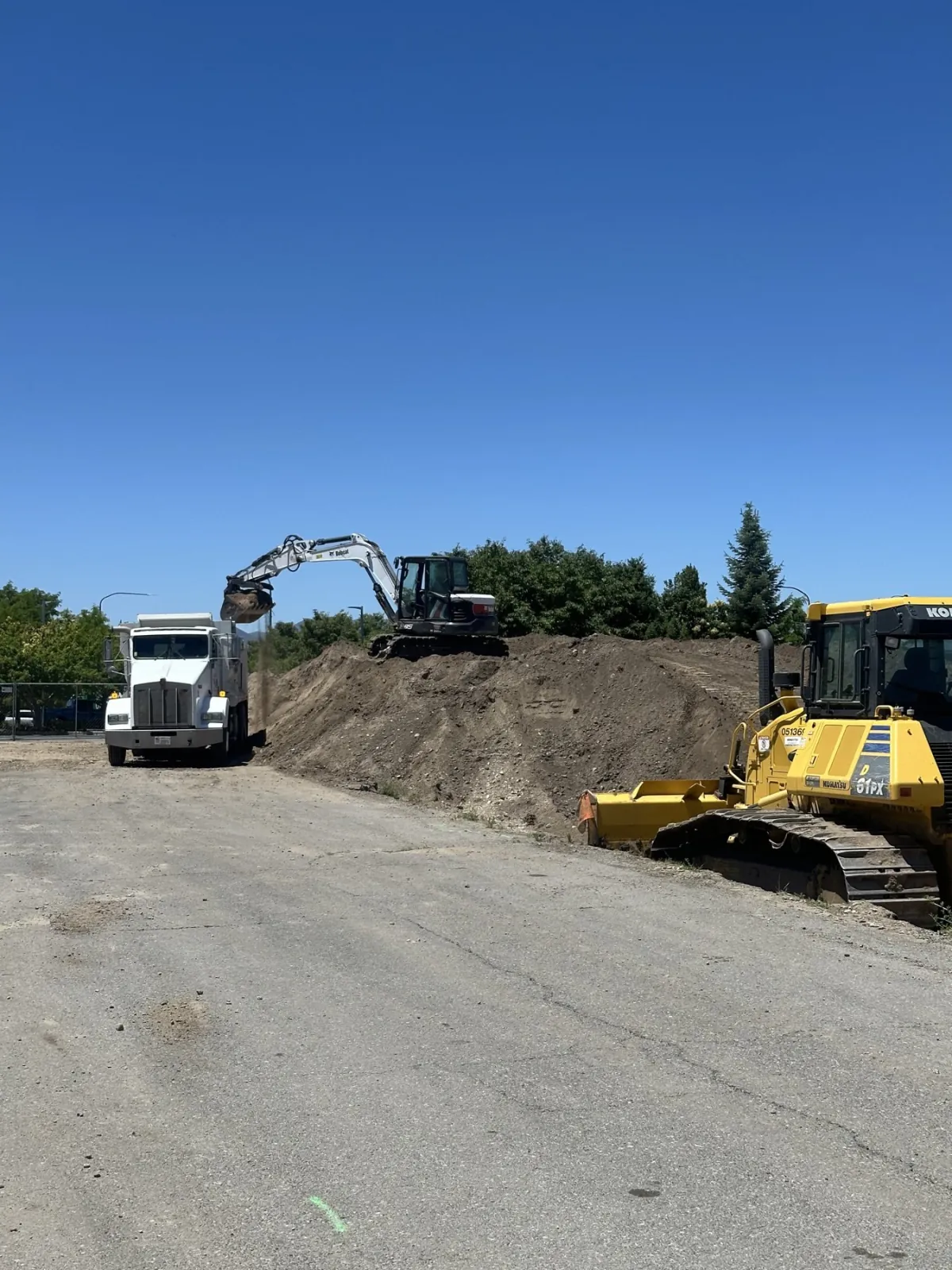
Excavation in Saratoga Springs — what's different here
Lakebed soil behavior
Fine-grained former lakebed material needs moisture control and real compaction testing — it does not behave like the gravel on the east bench.
Groundwater planning
Near the lake, water shows up in trenches. Knowing that before you dig is the difference between a planned cost and an emergency one.
Production subdivision pace
Volume homebuilding here means lot after lot on schedule, with grade held consistent across the whole phase.
How we do it
Site review & staking
We walk the site, review civil and geotech plans, confirm utilities are located, and set grade references before a machine moves.
Clearing & stripping
Vegetation, debris, and topsoil are cleared and stockpiled or hauled off, with erosion controls placed per the SWPPP.
Mass excavation & cut/fill
We cut to subgrade, balance fill on-site where possible, and compact in lifts to engineered density.
Trenching & fine work
Utility trenches, footings, and detail excavation are dug to line and grade, shored and protected per OSHA.
Final grade & cleanup
We bring the site to subgrade tolerance, verify with survey, and leave it ready for the next trade.
Questions we get in Saratoga Springs
Is groundwater a problem for basements in Saratoga Springs?
In the lower areas near Utah Lake it can be. It affects excavation depth, shoring, waterproofing, and perimeter drainage. We check conditions before digging rather than discovering them halfway down.
Do you do subdivision excavation for builders here?
Yes. We self-perform excavation, grading, and underground utilities, which means one subcontractor and one schedule across a phase instead of coordinating three.