
Utah County · Utah Lake west side
Grading Contractor — Saratoga Springs, UT
Grading flat ground sounds easier than grading a hillside. It isn't. On the old lakebed west of Utah Lake there's very little natural fall, so every bit of drainage has to be built deliberately — and a quarter-inch error over a long run is the difference between water leaving a lot and water sitting against a foundation. Add fine-grained soils that hold moisture and the compaction has to be done properly or the grade won't stay where you put it.
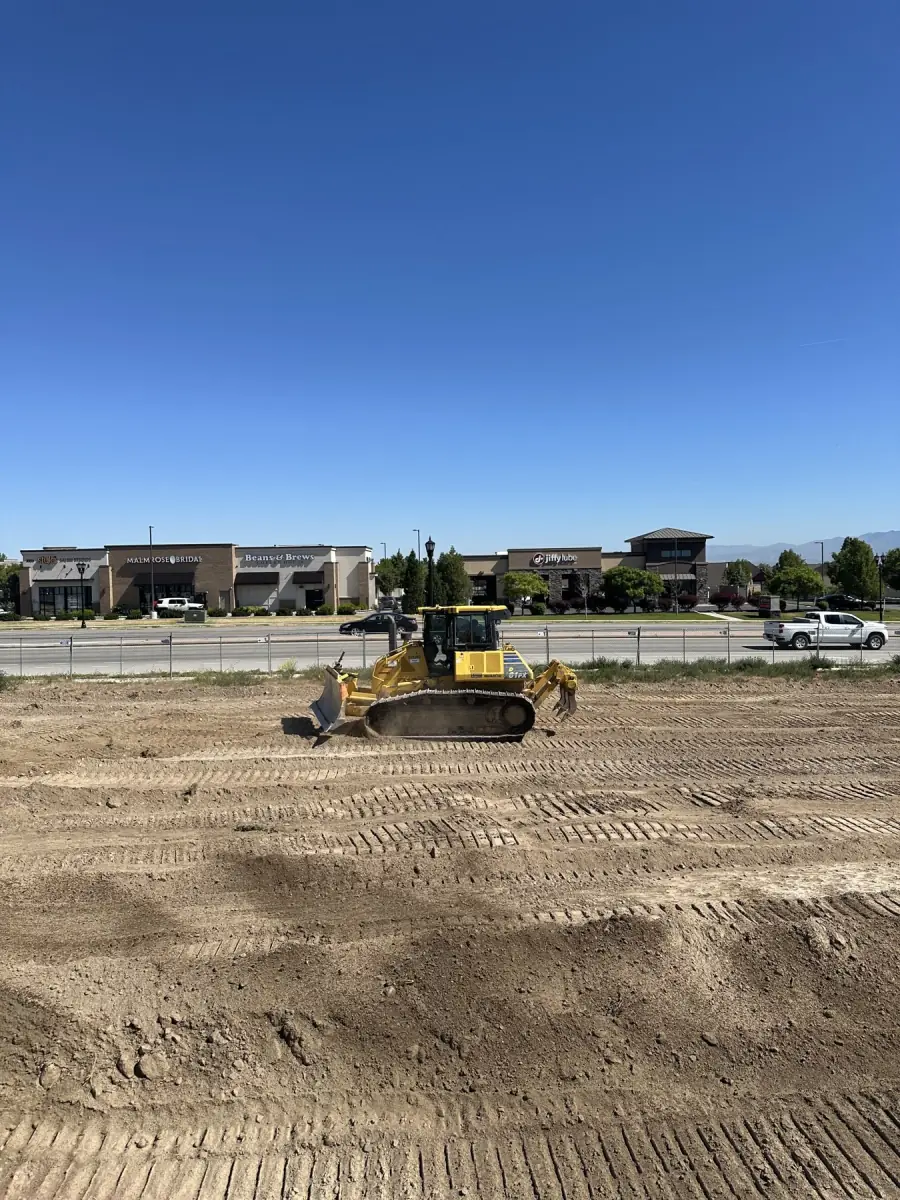
Grading in Saratoga Springs — what's different here
Drainage on ground with no fall
Flat sites need designed positive drainage. We grade to it and verify it, because there's no slope to bail you out.
Moisture-conditioned compaction
Lakebed soils need the right moisture content to reach density. Too wet or too dry and the pad settles later.
Consistency across a phase
Production subdivisions need lot after lot at the same grade and the same quality — not a good first lot and a rushed twentieth.
How we do it
Subgrade prep
Bring the site to subgrade and proof-roll for soft spots.
Rough grade
Shape pads, slopes, and drainage to engineered elevations.
Compaction & testing
Compact in lifts and verify density before finish.
Finish grade
Tighten to final tolerance, ready for concrete, paving, or landscape.
Questions we get in Saratoga Springs
Why does water pool on flat lots in Saratoga Springs?
Because there's almost no natural fall, so drainage only works if it was graded in deliberately. When a lot pools, it's usually because finish grade was set by eye instead of to a designed elevation.
Do you grade building pads for homebuilders here?
Yes — pad grading and lot grading across subdivision phases is core work for us, and we self-perform the utilities and flatwork that follow.